Overview
What this service covers
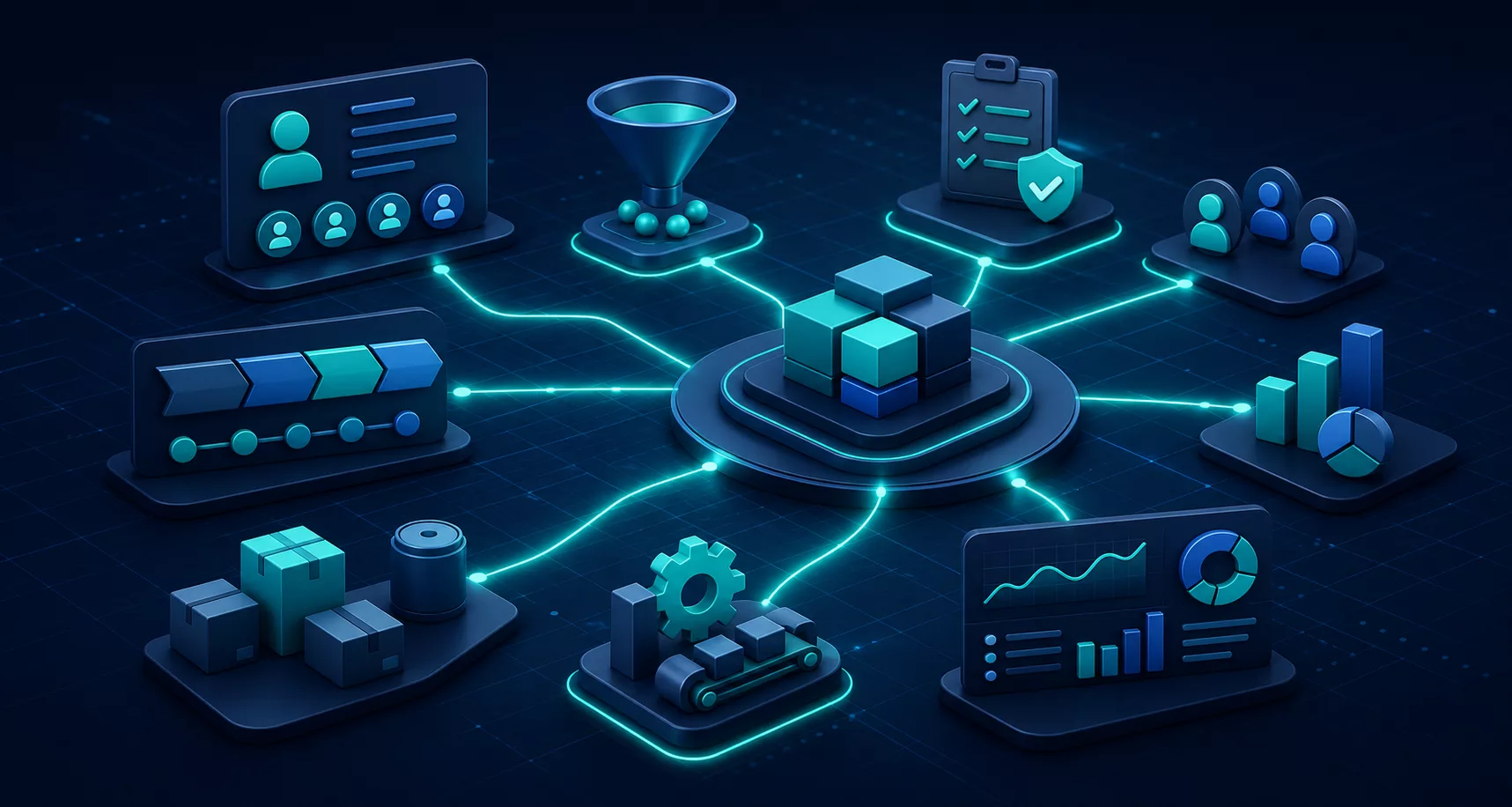
CRM and ERP software should create one dependable operating view instead of moving confusion from spreadsheets into a new interface. Tyon Technologies builds business software around the actual flow of leads, customers, services, billing, approvals and reporting. The goal is clearer ownership, less repetitive work and data that management can use with confidence.
We begin by mapping the current process and the decisions people make at each stage. Existing spreadsheets, forms and tools reveal important edge cases, but they are not copied blindly. Duplicate steps, unclear responsibilities and unnecessary fields are challenged before development so the software improves the process rather than preserving every historical workaround.
CRM workflows for leads and customers
A practical CRM captures the source and context of an enquiry, assigns an owner and keeps follow-up visible. Stages, reminders and activities are defined in business language so the team can use them consistently. Customer records connect communication, services, proposals, invoices and renewals without exposing information to users who do not need it.
Dashboards and reports focus on unanswered leads, ageing opportunities, conversion, source quality and upcoming actions. The system can connect website forms, WhatsApp acknowledgements or advertising data where the integration improves response.
- Lead capture and assignment
- Pipeline stages and follow-up tasks
- Customer and contact history
- Proposal, service and renewal tracking
- Source and conversion reporting
ERP and operational modules
ERP scope is selected around the organisation's highest-value operations. Modules may include service delivery, projects, inventory, vendors, purchases, expenses, billing or approvals. Each module has a clear owner and defined hand-off to the next process.
We prefer phased implementation because operational software affects many teams. Launching one connected workflow and measuring adoption is safer than switching every department to an untested system on the same day.
- Role-based operational dashboards
- Task, approval and escalation workflows
- Service, project or inventory records
- Billing, payment and expense visibility
- Management and exception reports
Roles, permissions and accountability
Access is designed around responsibilities, not only job titles. Users receive the minimum data and actions required for their work, while administrators can manage permissions through controlled interfaces. Important changes can be recorded with actor, time and context where auditability matters.
Exports and reports follow the same permission principles. A user who cannot view sensitive records in the application should not receive them through an unrestricted spreadsheet download.
Integrations and automation
Business software may need to exchange information with website forms, email, WhatsApp, payment gateways, accounting tools or existing databases. We evaluate API capability, identifiers, error handling and reconciliation before promising a connection. Reliable integration includes monitoring and a recovery path, not only a successful demo request.
Automation is applied to stable events such as assignment, reminders, approvals and status notifications. Human review remains for exceptions and commitments that require judgement.
Data migration and reporting quality
Historical data is reviewed for duplicates, missing fields, inconsistent formats and ownership before migration. We agree which records must move, how they will be validated and what can remain archived. Test imports are checked by business users before production cutover.
Reports are defined from business questions and consistent statuses. If teams use stages differently, a dashboard cannot repair the underlying definition; training and governance are part of the rollout.
Implementation cost and timeline
Cost depends on modules, roles, workflow rules, integrations, reports, migration volume, mobile requirements and change-management effort. A sales CRM with renewals is different from a multi-branch ERP covering inventory and finance.
We divide the scope into discovery, core workflow, integrations, migration, acceptance testing and rollout. This makes dependencies visible and gives the business control over later phases.
Why Tyon Technologies
Our team builds the website, Laravel backend, CRM interface and automation layer, reducing fragmentation between customer acquisition and internal operations. We focus on maintainable business rules and adoption instead of selling a large feature list.
Bring the current spreadsheet or workflow to the first discussion. We can identify the most expensive bottleneck and define a realistic first module.
Continue planning with related resources
Use these connected service pages and practical guides to compare scope, cost factors and the next implementation step.
Expected outcomes
- One source of operational truth
- Clearer team accountability
- Less spreadsheet dependency
- Faster business reporting
Deliverables
- Business process and data mapping
- Role-based modules and permissions
- CRM, billing, operations, or inventory workflows
- Dashboards, reports, and notifications
- Testing, deployment, training, and documentation
Process
- 01 Audit processes, roles, and current tools
- 02 Prioritize modules and data structure
- 03 Design workflows and reporting
- 04 Build, test, and review by module
- 05 Migrate, train, launch, and improve
Local service guides
Explore CRM, ERP & Business Software Development by city
Compare approved local scope, delivery, risks, and next steps without relying on duplicate cost-only pages.
Connected growth stack
Connect this service with your lead and operations workflow
These services work together to capture inquiries, organize customer data, automate follow-up, and keep human ownership clear.
CRM, ERP & Business Software Development FAQs
What is included in CRM, ERP & Business Software Development?
Business process and data mapping, Role-based modules and permissions, CRM, billing, operations, or inventory workflows, Dashboards, reports, and notifications.
Who is this service best for?
Best for teams managing critical sales, billing, inventory, or operational work across spreadsheets and disconnected tools.
How does the project move?
Audit processes, roles, and current tools, Prioritize modules and data structure, Design workflows and reporting, Build, test, and review by module.
How do we start?
Share your current goals through the contact form. The team will review the requirement and suggest the next practical step.
Topic hub
Explore the Software Development cluster
Move between the main service, focused solutions, practical articles, and pricing guides without searching the full website.